Helping customers help themselves: the Brinks Home support portal and website redesign
Redesigning BrinksHome.com, the customer support portal and self-help flows, grounded in user interviews, taxonomy rebuilds and accessibility fixes.
Problem
BrinksHome.com and the existing customer support portal were dated and difficult to navigate. Prospects struggled to compare home security systems and monitoring options, while existing customers often called phone support for routine tasks such as troubleshooting equipment, updating billing, or managing account access because self-help content was hard to find.
Role and collaboration
As Senior User Experience Architect, I led UX and UI design and design documentation across BrinksHome.com and the customer support portal. I gathered requirements across stakeholders, partnered closely with product management, engineering, copywriting and SEO consultants, and set up Figma workflows for the design team.
The work before the work: executive and board alignment
Before starting full production work, I synthesized customer pain points, structural findings and redesign recommendations into a clear narrative and presented them directly to the board and C-suite to secure alignment on scope, priorities and accessibility investments.
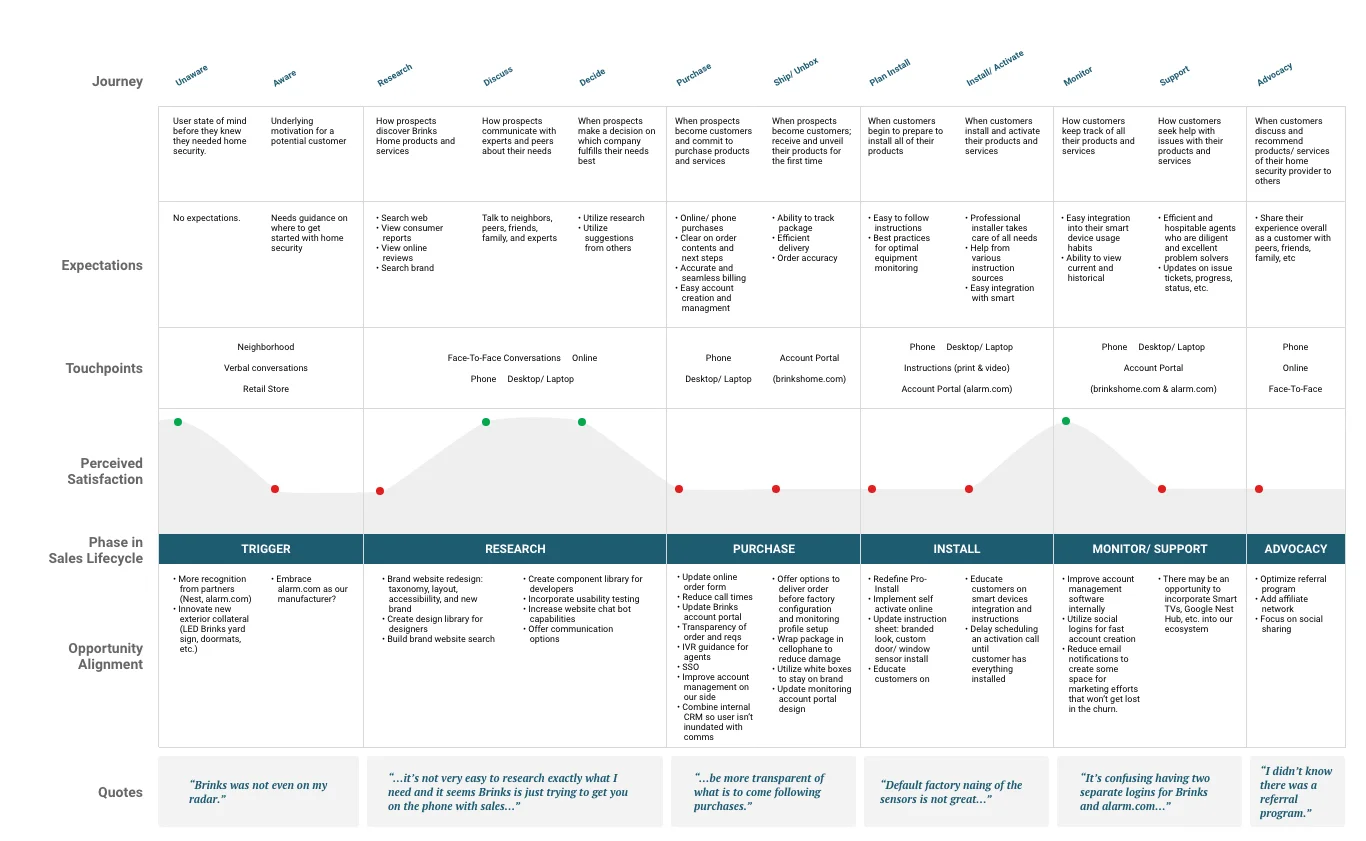
Key decisions
- Rebuilt site taxonomy and search findability: Restructured navigation and key pages during an SEO-focused rewrite of the homepage and advertising landing pages so prospects and customers landed directly on relevant answers.
- Restructured the help center and self-help flows: Grounded support flows in user interviews to surface step-by-step troubleshooting, account tasks and clear escalation paths without forcing a phone call first.
- Accessibility fixes upfront: Addressed contrast, keyboard navigation, semantic structure and form labeling across customer-facing flows to improve usability for all customers and reduce legal risk.
- Shared Figma component workflow: Standardized design handoff and reusable UI patterns in Figma so product and engineering could ship consistently across public pages and portal flows.
Outcome
My help-center and self-help work was part of a broader cross-functional team effort, alongside cleaner customer access and new self-help tools, that grew digital self-service from 14% to 35% of customer transactions during my Dec 2020 to May 2022 tenure (as cited by Brinks Home leadership in Authority Magazine, May 2024).
What I learned
Self-service only succeeds when information architecture, support tooling and customer account access move together. Treating the help center, portal navigation and marketing site as one connected system prevented dead ends where customers previously fell back to calling support.